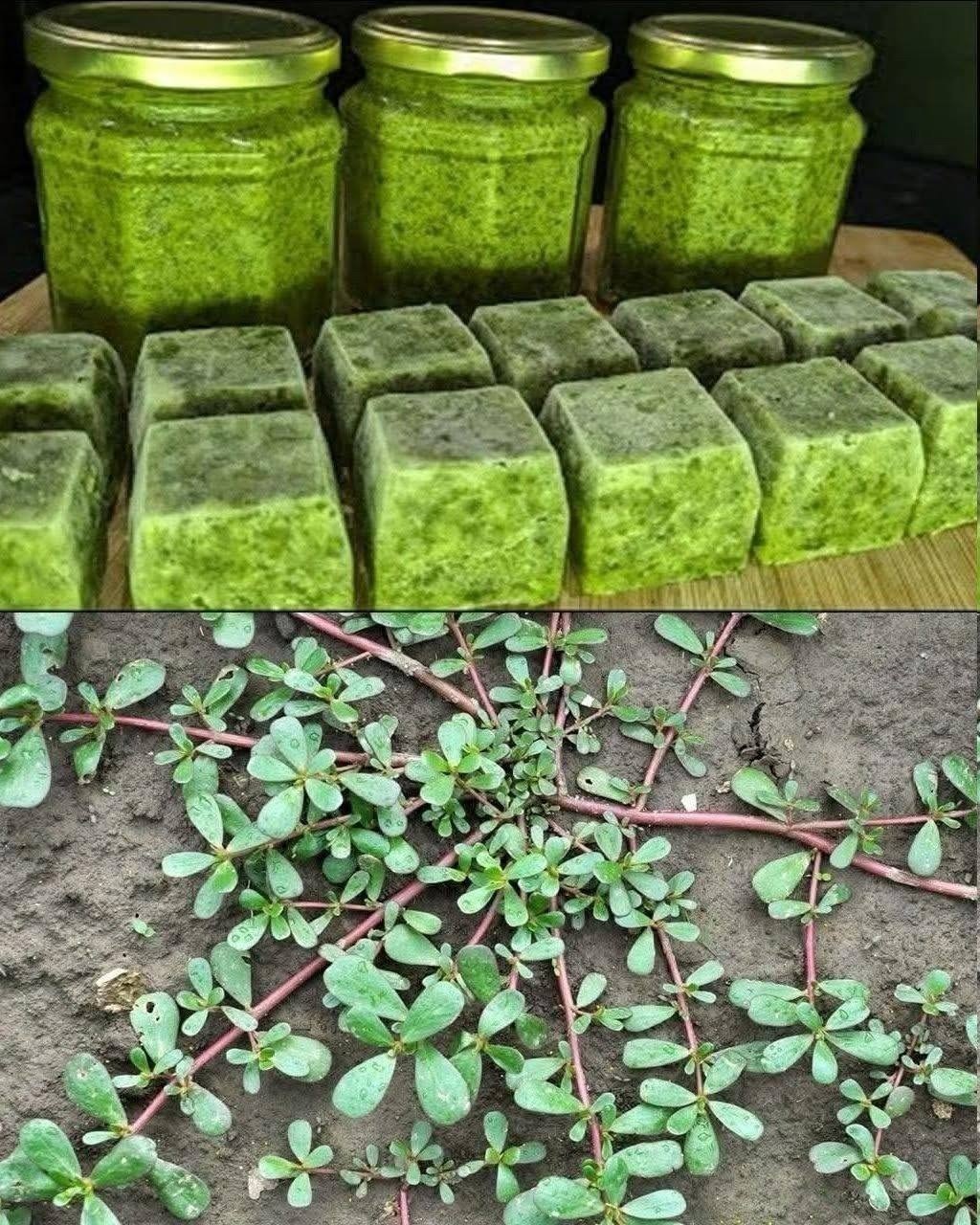
Purslane (Portulaca oleracea) is a resilient, trailing annual succulent characterized by small tear-shaped green leaves, reddish stems, and a crisp, slightly tart flavor. Though often categorized as a common weed in gardens and urban cracks, chemical analysis demonstrates that purslane is one of the most nutrient-dense wild greens available. Its array of essential lipids, antioxidants, and minerals offers evidence-based physiological support, particularly during the metabolic and structural changes that occur after age 60.
🔬 The Bio-Chemical Matrix of Purslane
The primary scientific interest in Portulaca oleracea centers on three key nutrient groups targeting age-related cellular pathways:
1. Plant-Based Omega-3 Fatty Acids (Alpha-Linolenic Acid)
Purslane contains an exceptionally high concentration of alpha-linolenic acid (ALA)—supplying roughly 300 mg to 400 mg per 100 g of fresh leaves—which surpasses virtually all other cultivated leafy greens.
-
Mechanism of Action: ALA serves as an essential structural unit for lipid bilayers in cell membranes. Upon consumption, a portion of dietary ALA converts to longer-chain omega-3s (EPA and DHA). These lipids inhibit the production of pro-inflammatory eicosanoids and cytokines, counteracting chronic, low-grade systemic inflammation (inflammaging) that accelerates arterial stiffening and cellular decline.
2. Multi-Tiered Antioxidant Network
The plant synthesizes a broad suite of free-radical neutralizing assets, including $\alpha$-tocopherol (Vitamin E), ascorbic acid (Vitamin C), $\beta$-carotene, betalains, and glutathione.
-
Mechanism of Action: This antioxidant defense matrix directly neutralizes reactive oxygen species (ROS) at the cellular level. By mitigating oxidative stress, these compounds help protect mitochondrial membranes, maintain vascular endothelial elasticity, and support tissue structure.
3. Bioavailable Macrominerals
Purslane is a natural reservoir for four key macrominerals: potassium, magnesium, calcium, and iron.
-
Mechanism of Action: Its elevated potassium-to-sodium ratio supports cardiovascular fluid balance. Potassium and magnesium act as natural vasodilators by relaxing smooth muscle cells within vascular walls, helping maintain healthy blood pressure levels.
🌿 Systemic Impacts After Age 60:
LOOK NEXT PAGE DEAR──►
For Complete Cooking STEPS Please Head On Over To Next Page Or Open button (>)