Choosing the food that ends up on your table is one of the most impactful decisions you make each day. For many consumers, the choice between store-bought and farm-raised beef goes beyond convenience—it centers on quality, flavor integrity, and confidence in agricultural systems.
As interest grows in clean eating and sustainable sourcing, understanding how diet, environment, and industrial scaling alter the physical properties of meat allows you to navigate the grocery aisle or butcher counter with total confidence.
🔬 How Diet and Environment Shape the Meat Matrix
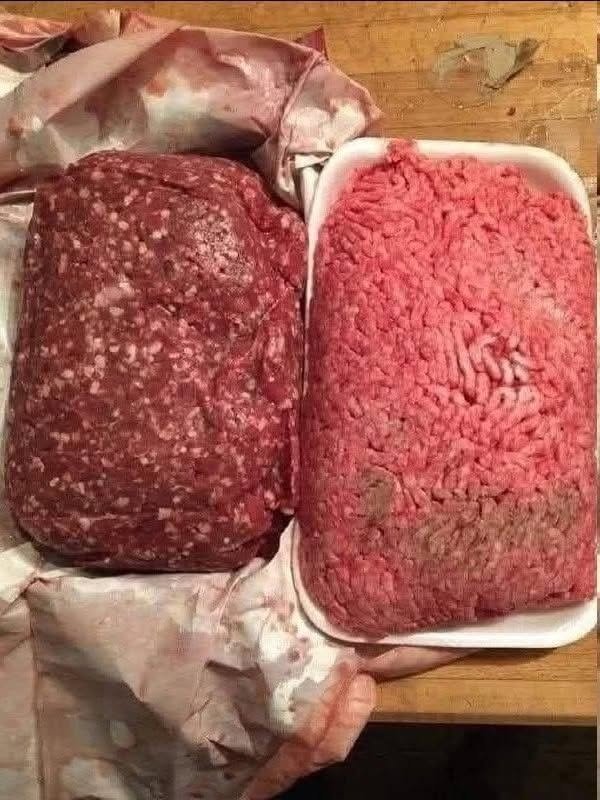
The primary differences between supermarket beef and local farm-raised beef stem directly from the lifecycle, physical activity, and dietary regimens of the cattle. These variables fundamentally alter muscle tissue structure and intramuscular fats.
Supermarket Beef (Industrial Feedlot Model)
The vast majority of beef sold in large grocery chains is sourced from commercial concentrated animal feeding operations (CAFOs), or feedlots.
-
The Diet: Cattle typically start on pasture but spend their final months on an intensive, high-calorie diet composed primarily of corn, soy, and grain byproducts. This shifts animal digestion, forcing rapid weight gain and accelerating fat accumulation.
-
Tissue Structure: Because feedlot cattle have restricted mobility, their muscle fibers remain under-exercised and soft. This produces meat that is uniform and tender, but often lacks a deep, complex flavor. The fat composition also trends higher in Omega-6 fatty acids due to heavy grain intake.
Farm-Raised Beef (Pasture-Centric Model)
Beef sourced directly from local, independent farms typically comes from animals raised on pasture utilizing rotational grazing.
-
The Diet: These animals subsist on a natural forage diet of grasses, legumes, and shrubs for the majority of their lifecycle. Many local farmers utilize a “grass-fed, grain-finished” approach, allowing cattle to graze freely before introducing select grains briefly to optimize marbling.
-
Tissue Structure: Pasture-raised cattle move constantly, exercising their muscle groups naturally. This continuous physical activity creates a denser, firmer muscle fiber matrix. The resulting beef boasts a robust, traditional, and distinctly deep flavor profile, and is structurally richer in Omega-3 fatty acids and Conjugated Linoleic Acid ($\text{CLA}$).
📊 Quick-Glance Sourcing and Quality Comparison:
LOOK NEXT PAGE DEAR──►
For Complete Cooking STEPS Please Head On Over To Next Page Or Open button (>)