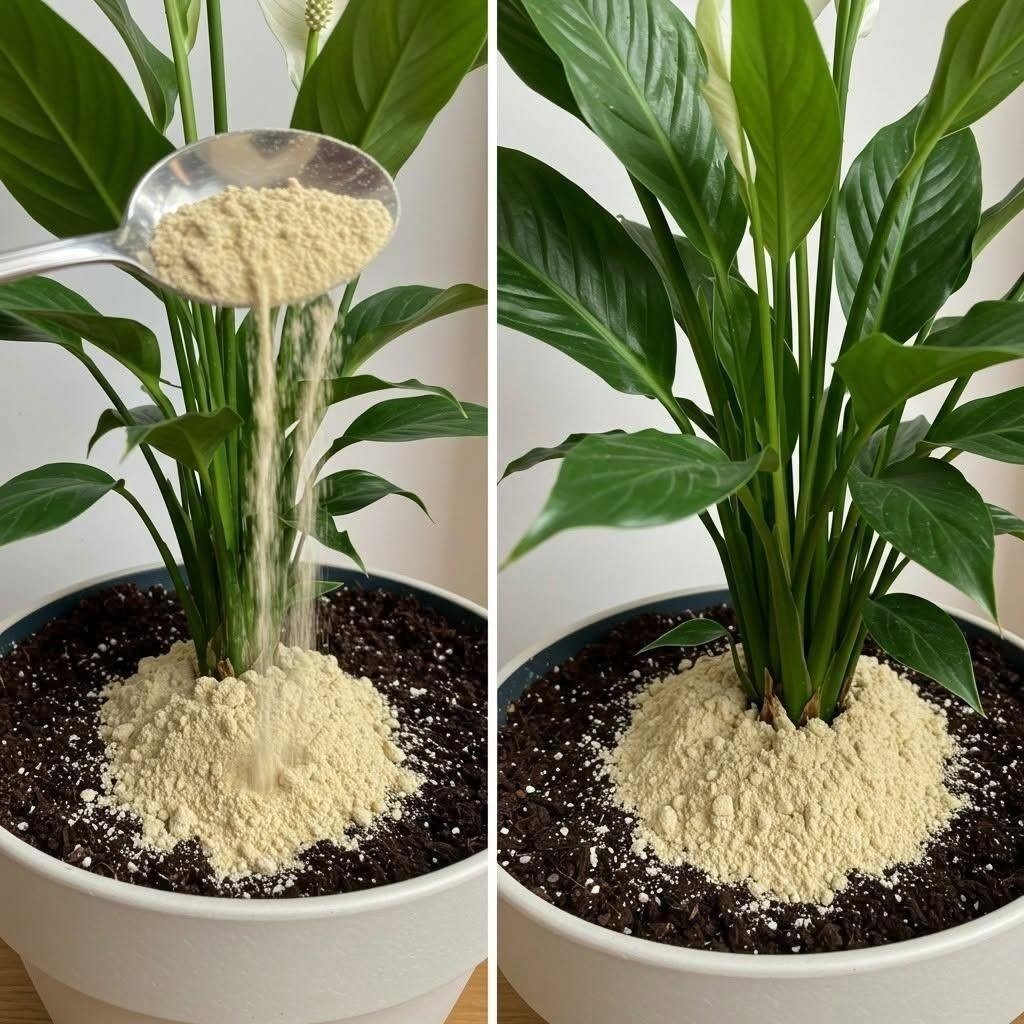
🏛️ The 4 Environmental Pillars of Peace Lily Care
A potassium infusion provides the chemical catalyst for flowering, but blooms will not form if fundamental growing conditions are out of balance.
Environment & Care Matrix
| Growth Factor | Ideal Condition | Sign of Deficiency / Stress | Corrective Action |
| Light | Bright, indirect (dappled) light. | Dark green leaves with zero flower production (too low); scorched, bleached patches (too high). | Move 3–5 feet away from a south/west window, or place directly near an east-facing window. |
| Moisture | Consistent moisture; top 1 inch dry before re-watering. | Drooping stems and crisp brown edges (under-watering); yellowing leaves and soft stems (root rot). | Water thoroughly until liquid drains from bottom holes. Never let the pot sit in standing water. |
| Humidity | High relative humidity ($>50\%$). | Dry, brown, crispy leaf tips. | Use a pebble tray, group with other tropical plants, or run a cool-mist room humidifier. |
| Dormancy | Cooler, lower-light rest in winter. | Pale growth or fertilizer burn from forcing winter blooms. | Cease all fertilization in autumn/winter. Resume potassium infusion in early spring. |
💡 Quick Troubleshooting Tips
-
Use Filtered Water: Peace lilies are sensitive to fluoride and chlorine found in tap water, which often cause leaf-tip burn. Let tap water sit open for 24 hours or use filtered water.
-
Potted Drainage: Always ensure the peace lily is planted in a pot with functional drainage holes and a loose, peat-based potting mix to prevent root hypoxia.
For Complete Cooking STEPS Please Head On Over To Next Page Or Open button (>)
ADVERTISEMENT
ADVERTISEMENT